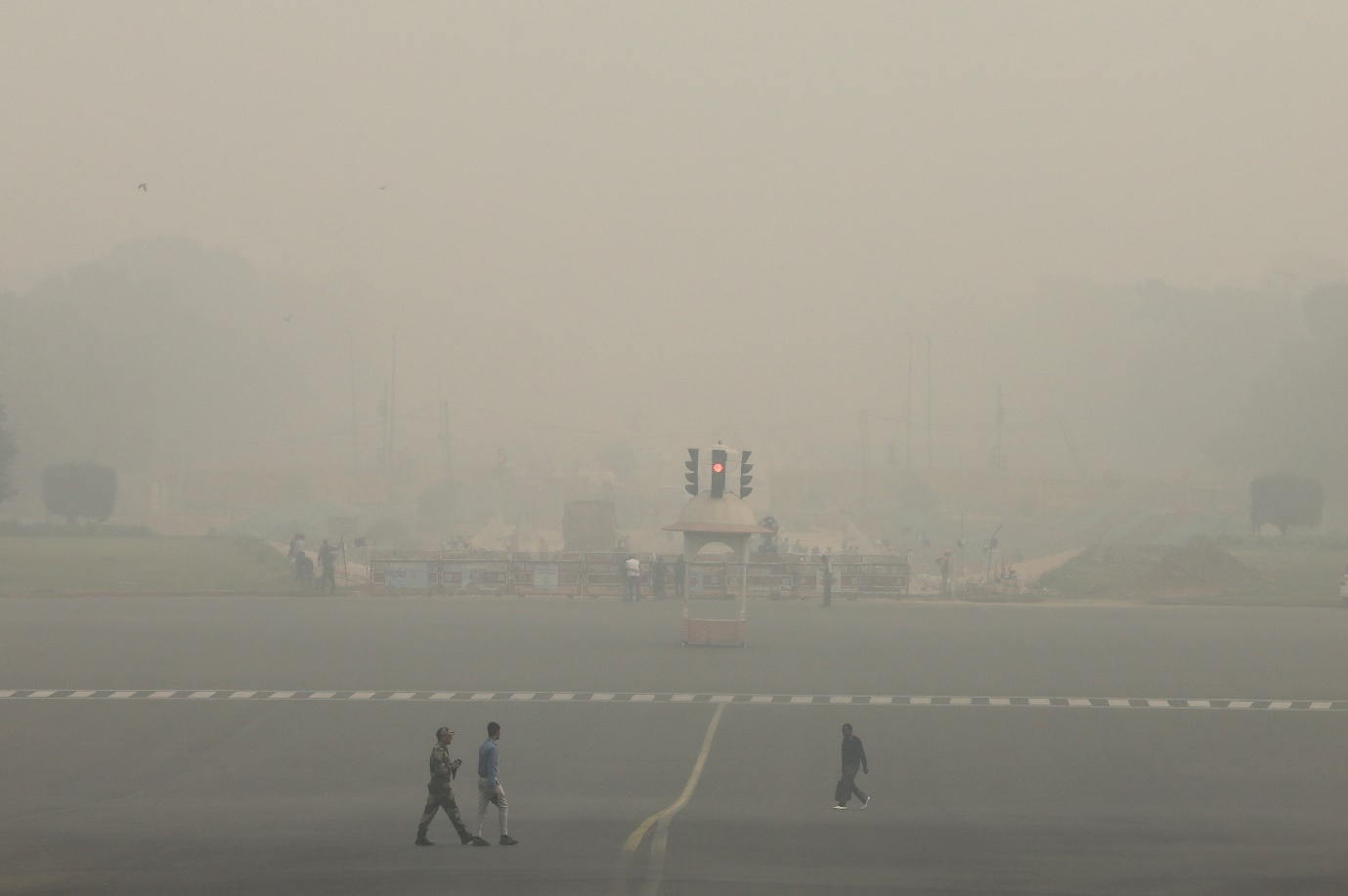
New Delhi to shut schools, construction sites as pollution worsens

What happened?
- Delhi woke up to high levels of air pollution last week as air quality index (AQI) slipped into ‘very poor’ category while some parts of the city saw AQI turn ‘severe’.
- Real-time air quality monitoring data from the Central Pollution Control Board (CPCB) showed that particulate matter of 2.5 and 10 micrometres (PM2.5, PM10) were the prominent pollutants at the three highly polluted areas.
- Besides concentration of particulates, the CPCB also monitors gas concentrations,
- Including of nitrogen dioxide (NO2), ammonia (NH3), sulphur dioxide (SO2), carbon monoxide (CO), and ozone (O3).
- However, concentrations of these gaseous pollutants were within the moderate range at these highly polluted areas, CPCB data shows.

What are particulates?
- 5 and PM10 are mixture of solid and liquid particles generally having diameters of or less than 2.5 and 10 micrometres—
- Smaller than the diameter of a single strand of average human hair, which is about 70 micrometres.
- These particulates are emitted from various sources and can be inhaled, causing serious health problems.
- Their physical and chemical characteristics vary by location, and common chemical composition includes nitrates, sulphates, ammonium, and also metals and biological components.
- Combustion of diesel and petrol in engines, combustion of solid fuel for energy production, construction and industrial activities, and erosion of pavement by road traffic are some of the primary sources of PM,
- But they are also formed in the atmosphere through chemical reaction of gaseous pollutants.
Health impact of particulates
- Health effects of inhalable particulate matter, due to short term and long term exposure, include
- Aggravation of respiratory and cardiovascular problems and also mortality from these problems and lung cancer.
- Susceptible groups with pre-existing lung or heart disease, as well as elderly people and children, are particularly vulnerable.
- A joint study found that India had one of the highest annual exposure to PM2.5 levels in the world in 2017, with highest exposure being in Delhi.
- The study attributed 7 lakh deaths in the country to outdoor particulate matter air pollution and 4.8 lakh deaths due to household air pollution.
- gaseous pollutants
Nitrogen dioxide (NO2)
- NO2 gets in the air from burning of fuel, from sources including emissions from vehicles and power plants.
- Short-term exposure to high levels of NO2 can aggravate respiratory diseases like asthma, and lead to other problems such as coughing or difficulty breathing.
- Long-term exposure may also contribute to development of asthma and could increase susceptibility to respiratory infections.
Ammonia (NH3)
- Ammonia occurs naturally in air, soil and water, and is used as an agricultural fertiliser and in cleaning products.
- Short-term inhalation of high levels of ammonia can cause irritation and serious burns in the mouth, lungs and eyes.
- Chronic exposure to airborne ammonia can increase the risk of respiratory problems, including impaired lung function.
Sulphur dioxide (SO2)
- The largest source of SO2 in atmosphere is burning of fossil fuels by power plants and other industrial facilities.
- Short-term exposure to SO2 can harm respiratory system, making breathing more difficult.
- SO2 emissions in the air can also lead to formation of other sulphur oxides (SOx), which can react with other compounds in the atmosphere and form particulate matter.
Carbon monoxide (CO)
- It is a toxic, colourless and odourless gas, given off when fuel containing carbon, such as wood, coal and petrol, are burned.
- Breathing CO can cause headache, dizziness, vomiting and nausea.
- If CO levels are high enough, a person may become unconscious and die.
Ozone (O3)
- It occurs both in the Earth’s upper atmosphere and at ground level.
- At ground, O3 is created by chemical reaction between oxides of nitrogen (NOx) and volatile organic compounds.
- It can trigger a variety of health problems including chest pain, throat irritation and airway inflammation.
Leave a Reply