The World Health Organisation (WHO)
Released a revised Global Air Quality Guidelines on Wednesday, announcing more stringent limits for six pollutant categories —particulate matter (PM), ozone (O3), nitrogen dioxide (NO2) sulphur dioxide (SO2) and carbon monoxide (CO).

World Health Organisation air quality guidelines
- The World Health Organisation (WHO) on Wednesday released stringent air quality guidelines, lowering the recommended levels of pollutants that can be considered safe for human health.
- While a PM2.5 concentration of 25 micrograms per cubic metre in a 24-hour period was considered safe earlier, the WHO has now said that a concentration of over 15 micrograms is not safe.

- Although the guidelines are neither standards nor legally binding criteria, they are designed to offer guidance in reducing the health impacts of air pollution based on expert evaluation of current scientific evidence.
- These guidelines incorporate scientific evidence from multiple countries, which makes them relevant to the diverse conditions around the world and capable of supporting a broad range of policy options for air quality management.
- They are intended to be used in diverse conditions in all WHO’s regions and to support a broad range of policy options for air quality management.
- The recommended levels of six most common air pollutants — PM2.5, PM10, ozone, nitrogen dioxide, sulphur dioxide, and carbon monoxide – have all been revised downwards from the existing norms that have been in place since 2005.
- PM2.5 and PM10 refer to particulate matters of sizes 2.5 microns or less, and 10 microns and less, respectively (micron is one millionth of a metre), and are the most common pollutants, as well as causes of respiratory diseases.

- The new guidelines take into account several scientific studies in recent years that have suggested that air pollution is much more damaging to human health than earlier known. By WHO’s own estimates, nearly 7 million deaths every year can now be attributed to diseases that are a direct cause of air pollution.
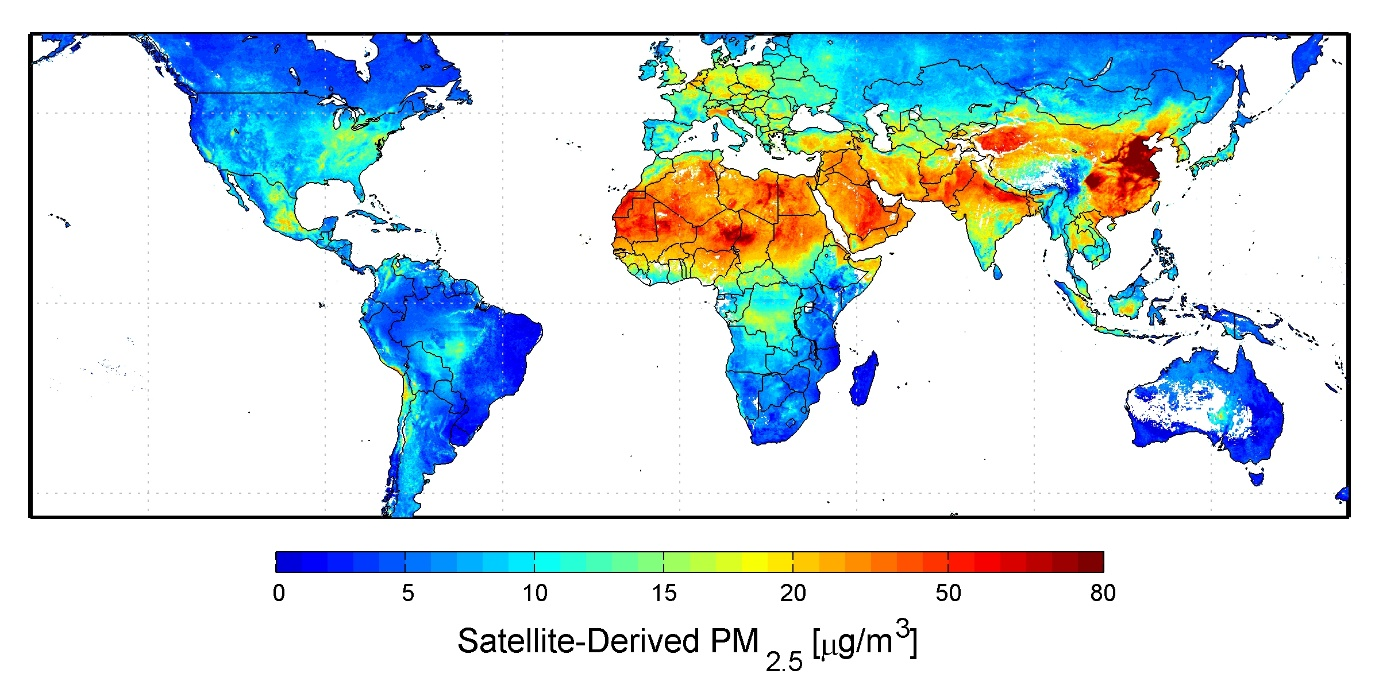
- The new air quality guidelines mean that nearly entire India would be considered a polluted zone for most of the year. But India is not alone. By WHO’s own admission, more than 90 per cent of the world’s population lived in areas which did not meet its 2005 pollution standards. With the norms now being made even more stringent, this proportion would go up.
- But South Asia, and especially India, continues to remain one of the most polluted areas in the world, with pollutant levels several times higher than recommended levels.
- In Delhi, for example, a Greenpeace study found the average concentration of PM2.5 in 2020 to be nearly 17 times higher than the recommended levels. In Mumbai, pollution levels were eight times higher; in Kolkata, over nine times higher; and in Chennai, over five times higher.
- India’s own national air quality standards are much more lenient, even compared to WHO’s 2005 norms.
- For example, the recommended PM2.5 concentration over a 24-hour period is 60 micrograms per cubic metre, compared to 25 micrograms advised by WHO’s 2005 guidelines.
- But even these lower standards are hardly met. In the last few years, the government has been working on a plan to reduce air pollution in some cities by 20-30 per cent by 2024 on a 2017 baseline.
- The WHO norms are not binding on any country. These are only recommended norms considered safe for human health, as assessed by scientific studies.
- But bad air quality does affect the international image of a country as a favourable tourist and investment destination.
Leave a Reply